Limited edition hand-bound book by Colin Michael Simmons
http://cadillacgypsy.com/
Student Designer, Meredith Lindsay
http://www.hennessyreps.com/
Rome, Florence, & Venice
Freelance Graphic Designer
Budapest, Hungary
With book artist and binder, Amanda Nelsen
Melbourne, Australia
thisisaphotoblog.com started by Tamar Levine
Site created by Michael McDonald of Organic Grid
An evening of burlesque dancing produced by Vaudezilla
Jeremy Fleischer
http://www.kudaphoto.com/
By photographer, Colin Michael Simmons – The Black Lights of Unconsciousness
4.25″ x 5.5″, 20 pages, full color, 235GSM paper, handbound edition of 20.
Limited edition, hand-bound piece…most were sent to various target clients and 5 were reserved for purchase at a local bookstore.
http://cadillacgypsy.com/


man·i·fes·to : a written statement declaring publicly the intentions, motives, or views of its issuer
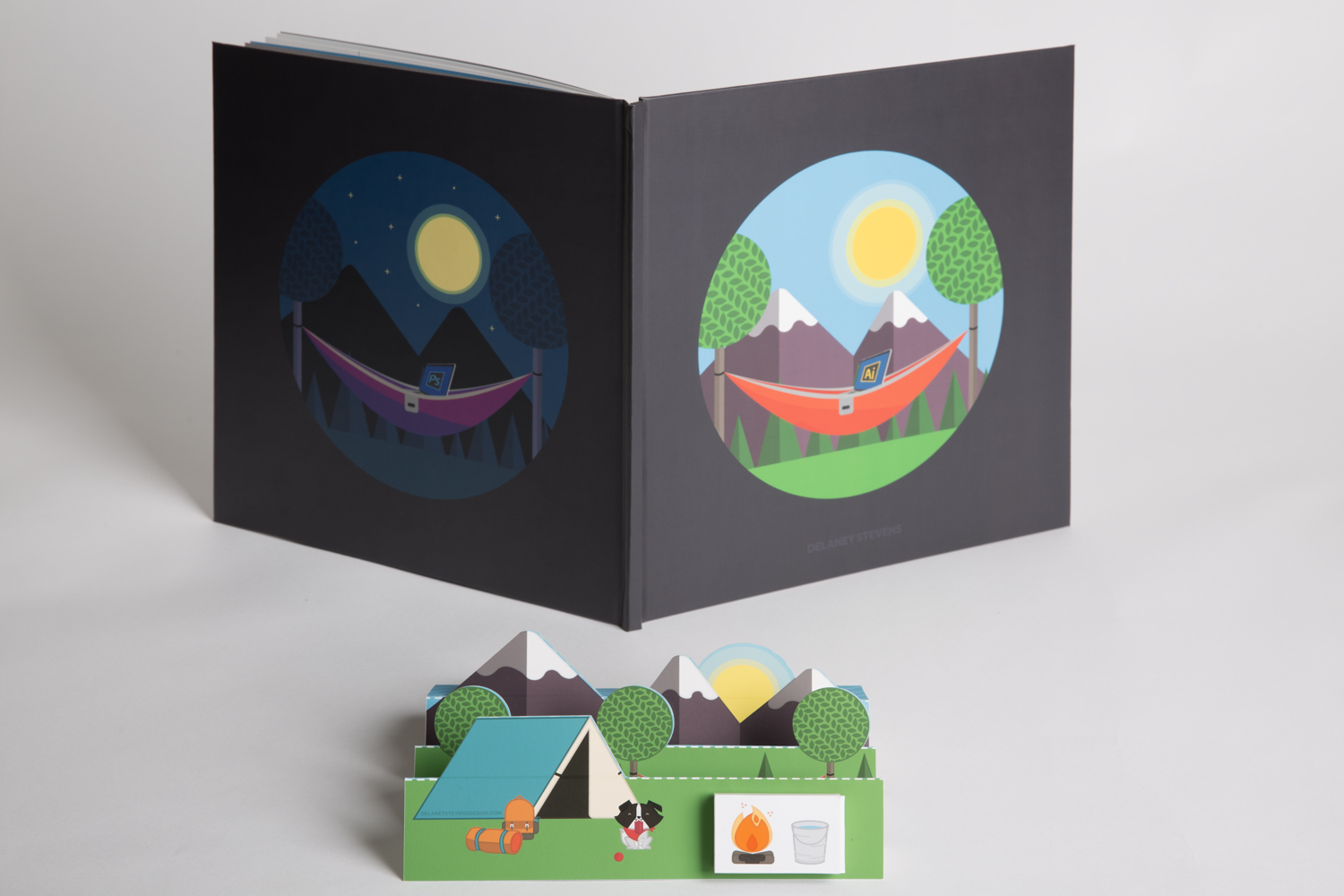
This past spring, I challenged my junior design students to create their own unique design “manifesto” books. There were some intriguing results. One of which was the following, by Endicott College graphic design student Meredith Lindsay.


Follow No Plastic Sleeves on Twitter and you’ll be entered in a drawing to win a free copy of our book, No Plastic Sleeves: The Complete Portfolio Guide for Photographers and Designers. The winner will be announced on the site and through Twitter at the end of July.
ps. If you’re already a follower, you’ll be automatically entered.
![]() | Melissa Hennessy is the owner of Hennessy Represents, an agency based out of Chicago and New York that represents artists in still photography, motion, CGI, & animation. She currently represents 1 CGI artist and 8 still and motion photographers in all different genres, across the U.S.
I recently had an opportunity to ask Melissa a few questions and get her perspective on the current photo market and what photographers can do to promote and market themselves. In her responses she’s provided some valuable insight and I’m pleased to be able to share her advice with all of you. |
Interview
For students and those who may be new to the field, could you explain what an artist representative is and how that relationship works with a photographer?
An artist representative works collaboratively with the photographer to develop the artist’s vision & identify who best to promote his/her work to. It’s a vested relationship for both parties built on motivation, trust, open communication, strategy, & the willingness to continually try new things & keep growing.
Could you talk a little bit about your own background and how you got into the photography business?
I studied advertising photography/photo illustration at RIT in Rochester, NY. After graduation I assisted photographers in NY for 4 years before going out on my own as a food photographer. I also had the opportunity to work as an agency account exec for 2 years where I learned I really wanted to combine the two skill sets – the creative & the marketing.
What do you like best about owning your own agency?
While I enjoy the versatility in the projects we work on & being involved in the production process, the biggest benefit is being able to work with such talented artists and encourage them to break boundries.
What are your thoughts on the uses of and importance of an online portfolio verses a printed portfolio book?
They both have their place of importance & support each other equally. If a creative goes to an artist’s website first & he/she isn’t impressed there, there won’t be a phone call coming to send in the printed book. The printed book should be representative of the site. In similar fashion, if the agent shows the printed book at an agency & a creative then wants to forward an electronic link or pdf of the work, both the site & the book need to be the best they can be & be cohesive in content. I think it’s fine if you have a few more images in the online portfolio, as long as the site & book are not drastically different from one another. Your online portfolio should be easy to navigate & load quickly & your printed book should have exhibition quality prints, 25-40 at most.
As a rep you see so many portfolios on a regular basis, both in print and digital form. What do you think distinguishes the very best?
This is one of those “ask 10 people get 10 different answers” questions.
I’m honestly not sure what makes a portfolio “the very best” besides resounding images & good flow/pagination. I do think you have to ask yourself a series of questions….What am I leaving the viewer with? When he/she closes the book do they know I’m a portrait photographer, or location photographer, etc, or are they totally confused because the work is so varied. Can they see that I make solid connections with my subjects or that my images have their own narratives, or their own humor, etc. Are they feeling “familiarity” or “curiosity?” If I use post production or a lighting style – is it consistent? Is each image able to stand on it’s own, or are there “filler images” that weaken the strength of the body of work? Is there an emotional component or single word that describes the work? I think if you can answer “yes” to those questions you’re on your way to a cohesive book that can only get better.
What do you think are the most important qualities for a photographer to have in today’s industry?
Flexibilty, Creative Problem Solving abillites, a sense of Humor, & Drive. That may sound cliche but it’s true. Many projects/branding campaigns have to cover a variety of mediums & platforms for today’s technology & learning to think about all of the ways an image can be used is essential in how you’ll meet & exceed a client’s needs. With regard to production, a great producer, crew, & creative production skills can make an impossible budget “possible” if you’re able to identify & present ways to stay within a given number. Clients appreciate that flexiblity, & they appreciate a sense of humor. Going on a shoot is a perk & if you’re spending a 16 hour day with a team of people, there’d better be some laughing.
Lastly, a photographer needs to have 2 different kinds of drive – the drive that is “ambition” to create new work & the drive that prompts you to involve yourself in the things that make you happy & develop you as a whole person. I think artists feel like they need to create something all the time & that can become heavy.
Recently, a set of scratch n’ sniff promotional cards and a video you did for your photographers at Hennessy Represents was heralded the “Best Promo Ever” on the popular A Photo Editor site. What advice do you have for creating promotional materials that stand out so well in such a crowded marketplace?
First I must thank you & Rob for recognizing the work, & Todd & Kim Pierson for creating the cards & painstakingly editing the video. Sending promotional materials is a hit or miss process. What one person likes, another may not so you have to try a little bit of everything. Whatever your idea is, share it with your own personal focus group before sending it out to gauge response. Think about the size of your promotion, the design/production costs, the postage,etc. It doesn’t always have be a postcard, it can be mixed media, or interactive with the user, like the Scratch n Sniff idea, etc, the possibilities are endless. Regardless of what you send or how cool it may be, if the work isn’t strong it will still be tossed. Good work will always stand out.
And finally, I think one of the biggest questions right now is – for photographers struggling to make ends meet, what advice do you have for finding work out there?
Create portfolio pieces of the type of work you want to be doing & target both agencies/design firms/editorial & corporations directly. Make yourself visible on industry search sites like Photoserve, Workbook, FoundFolios, CA, etc. Use your social media tools to help keep your promotional costs down, and pick up the phone, but don’t be a stalker. (Creatives are turned off by someone who calls/emails too frequently.) Enter contests & submit work to industry sites to increase your chances of exposure. Attend industry events or trade shows of the type of work you do to increase your chances of making more connections. Try a gallery exhibition, personal project, or something inexpensive that makes you happy to keep a postive vibe. Get a part time job if you have to. Bottom line is you have to keep your name out there in both good & bad economies.
I really like this idea by photographer, Noah Webb for a passport book of photographs. Especially since the photographs are relevant to the concept and taken while visiting the Italian cities stamped on the front of the book. The concept really informs the body of work, contextualizes and enhances its meaning. The book itself looks and feels just like a real passport, except of course for the wonderful photographs inside which are individually cut from ‘contact prints’ made directly from the medium-format negative film. Check out Noah’s website at http://www.noahwebb.com/.


How to Identify Key Brand Attributes
However you come to determine your brand qualities (for more info about this click here), you will want to narrow down your list and focus on about three to five descriptive words. Choose qualities that best represent your unique capabilities and attitudes. Think about how you would envision translating these qualities into a more tangible ” look and feel. ” Try to choose brand qualities that will lend themselves to creating a more focused, positive, and memorable impression that distinguishes you. Words like – witty, vintage, bold, intense, organized, daring, confident, imaginative, reflective, quirky, experimental, retro, edgy, outgoing, enthusiastic, focused, classic, raw, poetic, creative, playful, and wacky, are some choices you could use to describe your style.
Brand Statements
A brand statement (sometimes known as a brand position) is a single statement that communicates quickly and succinctly the core values of an individual or company as they relate to its strategic positioning within a particular industry.
Personal brand statement: A single sentence that strategically promotes who you are, what you stand for, and what you’re best at. It is a difficult process to develop such a statement as it challenges you to focus on your strongest positive attributes and then have the confidence to state them clearly and concisely. Be forward-thinking—take a stand, focus your message, and set yourself apart. A targeted message is guaranteed to make you more visible and memorable. Don’t worry about including all your talents and skills in this statement. You shouldn’t include everything you can think of—this will only water down your message. Besides, there is a baseline level of skills and experience that should be true of most people in your industry. Such expectations should be demonstrated through the actual work in your portfolio. Your brand and subsequent portfolio design should, however, go above and beyond a generic description and focus on what makes you special. It’s better to be targeted and have something more unique to say than to be too generalized and like everyone else. Your brand statement will be used as a guide, a touchstone, in the expression of your portfolio concept and design. A personal brand statement can also provide the basis for the development of a visual identity if you decide to create one.
Sample statement:
I am a [state professional title (photographer, graphic designer, illustrator, etc.)] with strong (amazing, leading, etc.) skills in [list core skills] who is [list brand attributes (qualities)].
Exercise: Brand Book
Need help? Think about your brand like you’re telling a story about it—one that captures the essence of who you are as a creative professional. In advertising, most brands have a “brand book” that tells their story.
A brand book is the story and personification of a brand—its ethos. It answers the questions: What does a brand sound like? Feel like? Look like? What’s its purpose? Its mission? How is it different from its competitors? What’s its unique personality and characteristics? How does it think and perceive the world? How does the world perceive it? Through visual elements and copy a brand book tells its Story—written in the first-person narrative form as if the brand (or company it is representing) is speaking. – Christine Pillsbury, Creative Director, Beam Interactive and Relationship Marketing
This card was created by and for designer Kim Keene. She is a 2009 graduate of the Ringling College of Art and Design. About the card, she says, “This was a self promotional interactive card. When you spin the side wheel it gives you all my many amazing talents and proficiencies.
” Check out Kim’s work at http://kimkeene.carbonmade.com/.


Frank Béla is a graphic and typeface designer from Hungary. He studied at Krea Design and Art School in Budapest, Hungary. Frank has years of agency and freelance experience and has shown at various exhibition such as, at the Museum of Fine Arts and online at I Love Typography and Typography Served.
Below are several personal business card iterations designed by Frank himself.


Book Construction Series
This is the second in a series of video tutorials on book construction. The demonstrations are conducted by book artist and binder, Amanda Nelsen and were shot during a recent workshop. To view the first video tutorial on “How to Create a Printed Slip Cover”, Go Here.
Amanda Nelsen
Amanda’s work has been shown in numerous exhibits, most recently including: “A Dedication to Craft” at the Concord Museum, Concord MA; “Bound for Success” a Designer Bookbinders Int’l Competition exhibited in Oxford, Boston, San Francisco and New York; The Joan Mitchell Foundation MFA Grant Recipients in New York, NY; “20th Anniversary Celebration” at the Springfield Materials Reclaimation Center, Springfield, MA; “June.” Cambridge Community Television, Cambridge, MA; “Dirty Dozen 12 Artists and a Ton of Trash” at the Boston Children’s Museum, Boston, MA. Amanda is also the recipient of a 2010 Artist-in-Residence at the Minnesota Center for Book Arts. Her website can be found at http://www.amandanelsen.com/.
About this Tutorial
This video demonstrates how to fold a strip of paper to create an accordion fold book. It also demonstrates how to add pages to that book with adhesive.
Book Construction: Accordion Book from Danielle Currier on Vimeo.
This promotional campaign by designer Alexander Kara really caught my eye. The stark simplicity of the black text as bold message on a white background makes reference to the power of advertising copy and a simple poster – brought to life in the context of a more subversive “post no bills” propaganda style environment. The final promotional poster is also visually intriguing and certainly represents a unique conceptual idea.
When I asked Alexander about the project, this is what he had to say:
The aim of the project was to produce more than just a business card; an idea of collaboration between client, designer and the world around us, we need all these components to create an appropriate and successful design. The poster series was to display how simple messages can be effective in the world, in turn, enforcing the original concept.
Stickers were used for my contact details, for a practical and economic sense; my details (and i’m sure many other designers) tend to change (address, phone number), therefore this approach will ensure that the cards have a longer lifespan than a traditional approach.


business cards – front

hand-trimmed stickers

self-promo poster

Website: http://aprop.wordpress.com/
Follow No Plastic Sleeves on Twitter and you’ll be entered in a drawing to win a free copy of our book, No Plastic Sleeves: The Complete Portfolio Guide for Photographers and Designers. The winner will be announced on the site and through Twitter at the end of July.
ps. If you’re already a follower, you’ll be automatically entered.
Finding Inspiration in Each Other.
The site, thisisaphotoblog.com brings together a community of emerging photographers who take turns giving the group creative assignments. It was started in August 2008 by Tamar Levine and a handful of her Art Center College of Design classmates, and has grown to include twenty-one contributors, each with her or his distinct style and vision. This diverse mix of photographers provides as much diversity in the results of each monthly assignment.
Levine came up with the concept for the blog in the summer of 2008. “I really wanted to start a blog for a few reasons,” she stated, “To establish a photo community; to continue creative dialogue even after we finished school; to make a haven where we could just be creative without worrying about the money or competition; and to feed off of each other and hopefully get inspired.”
Some of Tamar’s photographs were recently featured in the PDN Photo Annual for Stock. Below are a few of the winning images.


Building a story, that’s what James Quantz Jr. does.
Taking what starts as a concept, James skillfully crafts what he captures in the camera into a one-of-a-kind visual production that grabs hold of the imagination in a truly remarkable way.
James’ terrific new online portfolio and iPhone website was created by the talented Michael McDonald, founder and creative director of Organic Grid. Michael was recently kind enough to answer a few questions for No Plastic Sleeves about online portfolio design and development. You can read that interview here.


This wonderful project was sent to us by Callie Lipkin of Callie Lipkin Photography. She’s doing all the right things to market herself, and it sounds like she’s having a good time doing it. It helps that she’s engaged in her local artist community and creating her own personal work. From there she helps organize what sounds like a spectacular event of burlesque dancing, live music, food and cocktails. And to top it off, she has created a number of fabulous films to promote the event and her studio.
In Callie’s own words – “I thought you might be interested in a non-traditional promotion we do at my studio. Its an annual event that is themed around a personal body of work I have been creating for the past few years. Every year I create new work based on my local burlesque troupe who I love dearly, and then in the spring they perform at my event which I market towards clients and potential clients using this personal work. This year, I shot 2 original short films using my HDSLR and sent out eblasts to my RSVP page which featured the different videos. One of them is currently featured on my site minus the invitation theme, the others are awaiting music licensing. Every year this brings in a huge boost to my business, this year is no different. It has helped me get to know clients who would otherwise be off limits to me by showing off my personal work and passion for production (the event itself is a large production) and a good time, and not making it all about viewing my portfolio during an office meeting alone.”
Follow No Plastic Sleeves on Twitter and you’ll be entered in a drawing to win a free copy of our book, No Plastic Sleeves: The Complete Portfolio Guide for Photographers and Designers. The winner will be announced on the site and through Twitter at the end of July.
ps. If you’re already a follower, you’ll be automatically entered.
Impressive brand identity design for this business card, cd, and booklet portfolio set by designer Mirtho Prepont.
http://myworkonthe.net/


A clear typographic hierarchy, defined color palette and a touch of information design (in the form of a bar graph and pie chart) all contribute to the strong design of this resume by designer Jeremy Fleischer. He’s also got a great reel of his work up on his website at http://www.jeremeydesign.com/.
Click image for larger view.
Great article for photographers about “how to get noticed” on the British Journal of Photography website. Also includes a nice mention about No Plastic Sleeves.
http://www.bjp-online.com/british-journal-of-photography/feature/1650956/how-noticed
Here’s one that’s a bit different. Recently submitted to No Plastic Sleeves by photographer Darius Kuzmickas, this original business card is sure to stand out. He’s got a really nice site too, check it out at http://www.kudaphoto.com/.