And The Winner Is….
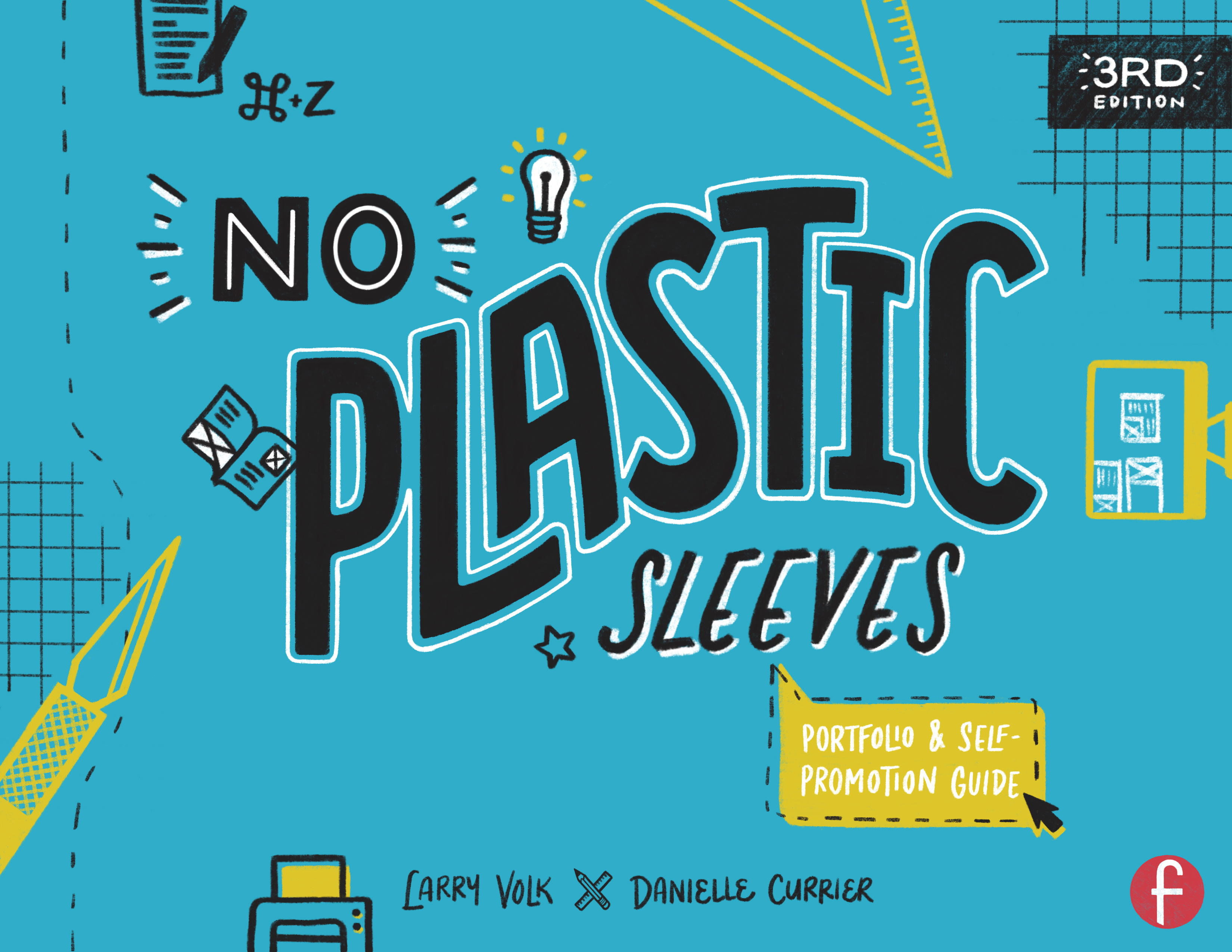
Posted in Articles by D. CurrierThe winner of our summer drawing for a free copy our book, No Plastic Sleeves: The Complete Portfolio Guide for Photographers and Designers, is Kelly Barto of Minneapolis, MN. Kelly, please contact me at danielle@noplasticsleeves.com so I can arrange to send you a free autographed copy. Thanks to everyone who participated and joined us on Twitter.
loading...
Enter Drawing to Win Free Copy of our Book
Posted in Articles by D. CurrierFollow No Plastic Sleeves on Twitter and you’ll be entered in a drawing to win a free copy of our book, No Plastic Sleeves: The Complete Portfolio Guide for Photographers and Designers. The winner will be announced on the site and through Twitter at the end of July.
ps. If you’re already a follower, you’ll be automatically entered.
loading...
Interview with Melissa Hennessy of Hennessy Represents
Posted in Articles, Interviews by D. Currier | Tags: job market, photography, promotion![]() | Melissa Hennessy is the owner of Hennessy Represents, an agency based out of Chicago and New York that represents artists in still photography, motion, CGI, & animation. She currently represents 1 CGI artist and 8 still and motion photographers in all different genres, across the U.S.
I recently had an opportunity to ask Melissa a few questions and get her perspective on the current photo market and what photographers can do to promote and market themselves. In her responses she’s provided some valuable insight and I’m pleased to be able to share her advice with all of you. |
Interview
For students and those who may be new to the field, could you explain what an artist representative is and how that relationship works with a photographer?
An artist representative works collaboratively with the photographer to develop the artist’s vision & identify who best to promote his/her work to. It’s a vested relationship for both parties built on motivation, trust, open communication, strategy, & the willingness to continually try new things & keep growing.
Could you talk a little bit about your own background and how you got into the photography business?
I studied advertising photography/photo illustration at RIT in Rochester, NY. After graduation I assisted photographers in NY for 4 years before going out on my own as a food photographer. I also had the opportunity to work as an agency account exec for 2 years where I learned I really wanted to combine the two skill sets – the creative & the marketing.
What do you like best about owning your own agency?
While I enjoy the versatility in the projects we work on & being involved in the production process, the biggest benefit is being able to work with such talented artists and encourage them to break boundries.
What are your thoughts on the uses of and importance of an online portfolio verses a printed portfolio book?
They both have their place of importance & support each other equally. If a creative goes to an artist’s website first & he/she isn’t impressed there, there won’t be a phone call coming to send in the printed book. The printed book should be representative of the site. In similar fashion, if the agent shows the printed book at an agency & a creative then wants to forward an electronic link or pdf of the work, both the site & the book need to be the best they can be & be cohesive in content. I think it’s fine if you have a few more images in the online portfolio, as long as the site & book are not drastically different from one another. Your online portfolio should be easy to navigate & load quickly & your printed book should have exhibition quality prints, 25-40 at most.
As a rep you see so many portfolios on a regular basis, both in print and digital form. What do you think distinguishes the very best?
This is one of those “ask 10 people get 10 different answers” questions.
I’m honestly not sure what makes a portfolio “the very best” besides resounding images & good flow/pagination. I do think you have to ask yourself a series of questions….What am I leaving the viewer with? When he/she closes the book do they know I’m a portrait photographer, or location photographer, etc, or are they totally confused because the work is so varied. Can they see that I make solid connections with my subjects or that my images have their own narratives, or their own humor, etc. Are they feeling “familiarity” or “curiosity?” If I use post production or a lighting style – is it consistent? Is each image able to stand on it’s own, or are there “filler images” that weaken the strength of the body of work? Is there an emotional component or single word that describes the work? I think if you can answer “yes” to those questions you’re on your way to a cohesive book that can only get better.
What do you think are the most important qualities for a photographer to have in today’s industry?
Flexibilty, Creative Problem Solving abillites, a sense of Humor, & Drive. That may sound cliche but it’s true. Many projects/branding campaigns have to cover a variety of mediums & platforms for today’s technology & learning to think about all of the ways an image can be used is essential in how you’ll meet & exceed a client’s needs. With regard to production, a great producer, crew, & creative production skills can make an impossible budget “possible” if you’re able to identify & present ways to stay within a given number. Clients appreciate that flexiblity, & they appreciate a sense of humor. Going on a shoot is a perk & if you’re spending a 16 hour day with a team of people, there’d better be some laughing.
Lastly, a photographer needs to have 2 different kinds of drive – the drive that is “ambition” to create new work & the drive that prompts you to involve yourself in the things that make you happy & develop you as a whole person. I think artists feel like they need to create something all the time & that can become heavy.
Recently, a set of scratch n’ sniff promotional cards and a video you did for your photographers at Hennessy Represents was heralded the “Best Promo Ever” on the popular A Photo Editor site. What advice do you have for creating promotional materials that stand out so well in such a crowded marketplace?
First I must thank you & Rob for recognizing the work, & Todd & Kim Pierson for creating the cards & painstakingly editing the video. Sending promotional materials is a hit or miss process. What one person likes, another may not so you have to try a little bit of everything. Whatever your idea is, share it with your own personal focus group before sending it out to gauge response. Think about the size of your promotion, the design/production costs, the postage,etc. It doesn’t always have be a postcard, it can be mixed media, or interactive with the user, like the Scratch n Sniff idea, etc, the possibilities are endless. Regardless of what you send or how cool it may be, if the work isn’t strong it will still be tossed. Good work will always stand out.
And finally, I think one of the biggest questions right now is – for photographers struggling to make ends meet, what advice do you have for finding work out there?
Create portfolio pieces of the type of work you want to be doing & target both agencies/design firms/editorial & corporations directly. Make yourself visible on industry search sites like Photoserve, Workbook, FoundFolios, CA, etc. Use your social media tools to help keep your promotional costs down, and pick up the phone, but don’t be a stalker. (Creatives are turned off by someone who calls/emails too frequently.) Enter contests & submit work to industry sites to increase your chances of exposure. Attend industry events or trade shows of the type of work you do to increase your chances of making more connections. Try a gallery exhibition, personal project, or something inexpensive that makes you happy to keep a postive vibe. Get a part time job if you have to. Bottom line is you have to keep your name out there in both good & bad economies.
loading...
Brand Attributes
Posted in Articles by D. Currier | Tags: brand, brand identityHow to Identify Key Brand Attributes
However you come to determine your brand qualities (for more info about this click here), you will want to narrow down your list and focus on about three to five descriptive words. Choose qualities that best represent your unique capabilities and attitudes. Think about how you would envision translating these qualities into a more tangible ” look and feel. ” Try to choose brand qualities that will lend themselves to creating a more focused, positive, and memorable impression that distinguishes you. Words like – witty, vintage, bold, intense, organized, daring, confident, imaginative, reflective, quirky, experimental, retro, edgy, outgoing, enthusiastic, focused, classic, raw, poetic, creative, playful, and wacky, are some choices you could use to describe your style.
Brand Statements
A brand statement (sometimes known as a brand position) is a single statement that communicates quickly and succinctly the core values of an individual or company as they relate to its strategic positioning within a particular industry.
Personal brand statement: A single sentence that strategically promotes who you are, what you stand for, and what you’re best at. It is a difficult process to develop such a statement as it challenges you to focus on your strongest positive attributes and then have the confidence to state them clearly and concisely. Be forward-thinking—take a stand, focus your message, and set yourself apart. A targeted message is guaranteed to make you more visible and memorable. Don’t worry about including all your talents and skills in this statement. You shouldn’t include everything you can think of—this will only water down your message. Besides, there is a baseline level of skills and experience that should be true of most people in your industry. Such expectations should be demonstrated through the actual work in your portfolio. Your brand and subsequent portfolio design should, however, go above and beyond a generic description and focus on what makes you special. It’s better to be targeted and have something more unique to say than to be too generalized and like everyone else. Your brand statement will be used as a guide, a touchstone, in the expression of your portfolio concept and design. A personal brand statement can also provide the basis for the development of a visual identity if you decide to create one.
Sample statement:
I am a [state professional title (photographer, graphic designer, illustrator, etc.)] with strong (amazing, leading, etc.) skills in [list core skills] who is [list brand attributes (qualities)].
Exercise: Brand Book
Need help? Think about your brand like you’re telling a story about it—one that captures the essence of who you are as a creative professional. In advertising, most brands have a “brand book” that tells their story.
A brand book is the story and personification of a brand—its ethos. It answers the questions: What does a brand sound like? Feel like? Look like? What’s its purpose? Its mission? How is it different from its competitors? What’s its unique personality and characteristics? How does it think and perceive the world? How does the world perceive it? Through visual elements and copy a brand book tells its Story—written in the first-person narrative form as if the brand (or company it is representing) is speaking. – Christine Pillsbury, Creative Director, Beam Interactive and Relationship Marketing
loading...
Enter Drawing to Win Free Copy of Our Book
Posted in Articles by D. CurrierFollow No Plastic Sleeves on Twitter and you’ll be entered in a drawing to win a free copy of our book, No Plastic Sleeves: The Complete Portfolio Guide for Photographers and Designers. The winner will be announced on the site and through Twitter at the end of July.
ps. If you’re already a follower, you’ll be automatically entered.
loading...
Community: A Blog for Emerging Photographers
Posted in Articles by D. Currier | Tags: community, photographyFinding Inspiration in Each Other.
The site, thisisaphotoblog.com brings together a community of emerging photographers who take turns giving the group creative assignments. It was started in August 2008 by Tamar Levine and a handful of her Art Center College of Design classmates, and has grown to include twenty-one contributors, each with her or his distinct style and vision. This diverse mix of photographers provides as much diversity in the results of each monthly assignment.
Levine came up with the concept for the blog in the summer of 2008. “I really wanted to start a blog for a few reasons,” she stated, “To establish a photo community; to continue creative dialogue even after we finished school; to make a haven where we could just be creative without worrying about the money or competition; and to feed off of each other and hopefully get inspired.”
Some of Tamar’s photographs were recently featured in the PDN Photo Annual for Stock. Below are a few of the winning images.


loading...
Enter Drawing To Win Free Copy of Book
Posted in Articles by D. CurrierFollow No Plastic Sleeves on Twitter and you’ll be entered in a drawing to win a free copy of our book, No Plastic Sleeves: The Complete Portfolio Guide for Photographers and Designers. The winner will be announced on the site and through Twitter at the end of July.
ps. If you’re already a follower, you’ll be automatically entered.
loading...
No Plastic Sleeves Book Wins Award
Posted in Articles by D. Currier | Tags: awardThe Bookbuilders of Boston chose our book as one of three winners for best cover and interior design under the category of “professional.” Thanks to Focal Press for all their work and support in the design of this book.
http://www.bbboston.org/pageAboutUs_BookShowWinners.cfm
loading...
NY Photo Festival 3D coverage project
Posted in Articles by D. Currier | Tags: 3D, photo festivalImmerse yourself in the NY Photo Festival, May 2010
Press Release
“International Photo Festival Turned Into Virtual 3D World – Using an innovative technique, the event is being captured and turned into a 3D online display, allowing anyone to visit at any time, even after the actual event is over.
The New York Photo Festival (NYPH), the first international photo festival in the United States, is among the first organizations to employ an exciting new method to bring their event to the entire world. The festival, which showcases the future of contemporary photography, gets underway May 12th in the DUMBO (“Down Under the Manhattan Bridge Overpass”) section of Brooklyn. But for the second time it will also be captured and rendered as a 3D online world, available to virtual visitors anywhere and at any time via the Web.
The 3D “coverage” is being executed by DUMBO resident Martin Lenclos. Lenclos creates 3D online experiences of actual events, through the interplay of photos and video interviews, all set in an evocative 3D representation of the event’s environment. Soon after an event begins, a virtual version is launched, which those interested can then visit and explore, both contemporaneous with those attending the event live, or at any point thereafter. The rendered 3D world immerses visitors in the environment of the event, and vastly expands the number of people who can experience it.
In association with BOX Creative LLC, a New York-based design firm, Lenclos has been developing the Flash-based application since 2008. Lenclos calls this 3D coverage “a new journalistic and artistic model for the representation of events, designed for proliferation throughout the web.” Like YouTube videos, the completed multimedia piece can be embedded in Websites and blogs, greatly expanding the potential exposure. Event organizers provide partners and interested media with a simple embed code for easy sharing.”
Developing a Brand Statement – Discovery
Posted in Articles by D. Currier | Tags: brand, brand statementExcerpt from “No Plastic Sleeves: The Complete Portfolio Guide for Photographers and Designers”, Chapter Two: Branding.
“You now have to decide what ‘image’ you want for your brand. Image means personality.” – David Ogilvy, Founder Ogilvy & Mather, Infamous Advertiser
Defining Your Own Brand Attributes
A good place to start thinking about your own brand statement is by reflecting on the work you’ve done, the person you are, and the creative professional you want to be. In order to do this, there are some key questions that you should ask yourself. Write down the answers that you come up. Trust yourself and listen to your intuition throughout this process. You should also think about getting the opinions of others whom you trust. Ask colleagues, faculty, clients, fellow designers, photographers, artists, etc., how they would characterize the work you do and the creative person they perceive you to be. Ultimately, you want to focus in on descriptive key words — adjectives and adverbs that can begin to define your own unique brand statement.
Reflect on Your Work
Ask yourself some key questions:
● What kind of work do you like to do?
● What kind of work do you do best?
● Was there a particular project that you really enjoyed working on?
● How would you define your talents and skill set?
● How would you describe the styles, forms, and concepts with which you prefer to work?
● How would others describe your talents and the work you do? (If you don’t know, ask.)
● What does your body of work say about you?
● Is there something missing from your body of work that you think you need?
Reflect on Yourself and Interests
Ask yourself some key questions:
● How would you describe yourself as a creative professional?
● How would you describe yourself in general – your personality, work ethic, beliefs, etc.?
● How would others describe you? (If you don’t know, ask.)
● Are these qualities communicated through any of the pieces you’ve worked on?
● What do you have to offer a company or client?
● What types of experiences engage you?
● What do you find most interesting about the world around you?
● What do you find most interesting about photography, art, and/or design?
● Whose work influences, attracts, and inspires you? Why?
Reflect on Your Future
Ask yourself some key questions:
● What kind of work do you want to do?
● What kind of creative do you want to be?
● Are you doing the kinds of things now that you want to be doing in the future?
● I f not, how can you position yourself to get to where you want to be?
● What kind of company or client do you want to work for?
● What kind of company would fit your lifestyle? Are there compromises you are willing or not willing to make (travel, moving to a different location, long hours, etc.)?
● Where do you see yourself in one, two, or five years?
● Is there someone in the field who you admire? Would want to emulate? Why? How did they get to where they are?
This is your opportunity to invent yourself for the first time, or reinvent yourself all over again. Think about where you’d like to be two years from now. How about five or ten years? People change jobs and even careers often throughout their lifetime. Now is the time to think about what you want out of your career.
“By defining what you show based on what you truly are and what you want to do, you create a self-selection process: you are not for everyone. You are different. Be courageous enough to show that you see in a way no one else does.” — Doug Menuez, Photographer, Editorial Photo – See full article here
Coming Up Next: How to write your “Brand Statement”
loading...
At the Bookstore
Posted in Articles by D. CurrierHere are a couple shots of our book at the bookstore – east coast meets west coast. Thanks to photographers Marcus Griep and Winni Wintermeyer for the photos. If you happen to come across our book in a Barnes & Noble or Borders bookstore, please take a quick shot of the book and email w/ location to danielle@noplasticsleeves.com. Much thanks!
Burlington, MA

Courtesy Marcus Griep
San Francisco, CA taken w/ phone

Courtesy Winni Wintermeyer
loading...
About Brand
Posted in Articles by D. Currier | Tags: brandExcerpt from “No Plastic Sleeves: The Complete Portfolio Guide for Photographers and Designers”, Chapter Two: Branding.
The primary function of your portfolio is to present a collection of your best work in order to communicate your experiences and capabilities, in hopes of securing a position or client. While this purpose cannot be forgotten, your portfolio can also be taken much further. It can become a quintessential marketing piece in and of itself. In doing so, it has the potential to make a more impactful and memorable impression on its intended audience. Your ability to develop ideas and market yourself is not only relevant to working in the creative industries, but it can provide a much-needed advantage in such a competitive field. This is especially important for students and recent grads who have not yet had as many opportunities to distinguish themselves in their careers.
How do you move from an assortment of work to a clear and concise brand statement?
How do you utilize a process of self-discovery to create a brand statement that can be used as a touchstone in the creation of your entire portfolio package?
First , consider where you are in this process.
- If you already have a clear concept or idea for the direction of your portfolio: Reflect and evaluate upon this idea as it represents and positions you within your field. Developing a brand statement can’t hurt — the clearer you are about how to position yourself within the industry, the better you’ll be able to do just that. Keep in mind (especially for those of you who do not have a design background) that you can develop a brand statement without developing a corresponding brand identity.
- If you already have a brand and corresponding brand identity: It may be time to analyze your current brand’s strengths and weaknesses, refreshing or changing it if need be.
- If you don’t know what to say and/or how to say it: Begin with a process of self-discovery, defining and shaping your brand position. The work in your portfolio may not be enough to take you where you want to go. While it’s difficult to define something, let alone oneself, in the long run it will help you to have a statement that you can use as a touching point in the development of your portfolio design.
A brand is an attitude. It is a symbolic statement comprised of descriptive qualities that aim to express the heart and soul of an individual, organization, or product. These qualities are typically defined by a set of brand attributes — a list of descriptive words and phrases that have the power to describe style, tone, and personality; establish connections and associations; and shape emotional reactions. Brands attempt to project certain expectations and promises in the hopes of establishing an emotional and intellectual connection with their target audience. Truly successful brands are able to deliver on those promises through the value that the individual or organization provides. Such brands express and establish a specific attitude that is identifiable throughout their particular market.
Think about the clothes you wear, the music you like, and the products you buy. Among all of these things you have choices you make based on certain attitudes and qualities that appeal to you. In some ways, these things even go so far as to defi ne aspects of who you are and the broader culture that you belong to. The most successful brands often become timeless icons of culture — think VW, Coca-Cola, MTV and Apple.
A strong brand should:
- Differentiate: Stand out from your competition.
- Be authentic: Communicate a message that is relevant and
meaningful to your intended target audience. - Be memorable: Consistently communicate a clear and concise
message.
Coming Up Next: How to develop a “Brand Statement” – Self Discovery
loading...
Larry Volk & Danielle Currier Interviewed for Adbase
Posted in Articles, Interviews by D. Currier | Tags: Adbase, InterviewsMy co-author, Larry Volk and I were recently interviewed for Adbase as part of their ongoing “Insight” series. In the interview we discuss a number of issues regarding portfolios and the approach to the portfolio process as described in our book. To check it out visit – http://www.adbase.com/Podcasts/NoPlasticSleeves.

Comments? Share your thoughts.
Click here to comment.
loading...
Interview with Organic Grid’s Michael McDonald
Posted in Digital Portfolios, Interviews by D. Currier | Tags: Interviews, websiteI’m excited to share with you a recent interview I conducted with Organic Grid founder and creative director, Michael McDonald. His work includes numerous award-winning portfolio websites and has been featured in numerous international design reference books and magazines including: logo lounge, communication arts, layout workbook, interface, netdiver, www design, in your face too, simple websites, best websites from around the world, adobe flash film festival, graphic design usa, art directors club, media inspiration awards, print magazine, .net magazine, web designing magazine japan, web marketing association, flash essentials, web designer uk, practical web design magazine, sxsw web awards, and the fwa: favourite website awards.

Q&A
Organic Grid has designed and developed a number of really successful portfolio sites for photographers and other creatives. What do you think the key qualities are that distinguish a successful portfolio site?
The key qualities that distinguishes a successful portfolio site are the following: a minimalist interface and page layout, and large full-screen imagery that has good composition and is well compressed so that it downloads relatively quickly. The interface and overall design of the website should play a secondary and supporting role to the actual content and imagery of the website design. The content should be the most important element and design on the site. The website should be easy to update, edit or change with a (CMS) Content Management System so that the website appears to be fresh with new content, “Content is King”…
Are there any current trends in web design that you would recommend someone take a look at or perhaps stay away from?
There’s no real innovative or mind boggling web trends for 2010, but perhaps having an iPhone/Android/Blackberry version of their website available on mobile devices will be a key in reaching new audiences. The trend for large full-screen imagery, cinematic style websites and minimalism will continue to blossom in 2010 as consumers become more educated and get tired of viewing poorly design websites that look like everyone else’s websites. I have observed and becoming increasingly concerned that too many websites are being designed with boilerplate website templates. “They are cheap, dilute your brand and look amateurish”…
For a photographer or designer who’s in a situation where they have to design and develop their own site, what advice would you give them? Are there inexpensive resources you would recommend that could help?
Building a simple and free blog from one of the numerous resources available today i.e. WordPress. Publishing your work/portfolio on the various social media websites i.e. (Facebook, YouTube, Twitter, etc…) are effective ways of getting your ideas, work, name and brand established. Purchasing a template from Livebooks.com is also quick and inexpensive alternative to getting your portfolio published quickly, the only downside to using something like LiveBooks is that there are hundreds if not thousands of photographers that will be sharing the same identical template “look and feel” as you. Simplifying your website and portfolio will always serve you best in establishing and differentiating yourself from other artists. Creative directors, art directors, and media buyers alike do not have time to look through hundreds of photographs and or figure out how to use your website, “Less is More”…
I noticed that most if not all of your portfolio site designs are created in Adobe Flash. What do you think the benefits are to creating a portfolio site in Flash (versus a CSS/HTML type site)? Are there any drawbacks to using Flash?
The benefits of creating a portfolio based website using Adobe Flash simply outweighs building a website in CSS/HTML, in my personal opinion. Adobe Flash allows me the opportunity of creating an immersive, seamless, full-screen, and cinematic experience that creates a visual impact and helps show off the artists’ work and talent. The drawbacks of using Adobe Flash to build a portfolio based website is that currently there is currently no Adobe Flash plug-in support for the iPhone, and that the time & cost to building a custom Flash website is more expensive than building a traditional website in CSS/HTML.
What do you enjoy most about what you do?
I personally enjoy working and collaborating with other talented and like minded creatives who value good design, and are willing to take calculated risks. I really enjoy creating simple, effective, elegant and meaningful interactive experiences that help my clients sell their work, build their brand, and expose their talents to wider audiences on a international scale.
loading...
Book available at Barnes & Noble bookstores
Posted in Articles by D. CurrierI’m happy to report that our book, No Plastic Sleeves: The Complete Portfolio Guide for Photographers and Designers, is available at Barnes & Noble bookstores across the U.S. It would be awesome to see the book at different B&N locations across the country. So if you happen to be in one, please take a quick shot of the book and email w/ location to danielle@noplasticsleeves.com. Much thanks!
loading...
Top Ten Tips
Posted in Articles by D. Currier- A comprehensive portfolio package should include more than just a portfolio book. You will also need a website, resume, cover letter, and perhaps even a business card and other types of promotional materials.
- Your entire portfolio package should function cohesively with unifying visual elements that tie together these separate, but related pieces – all establishing and reinforcing a consistent, positive message about you.
- The most powerful way you can communicate your unique identity – your strengths and abilities – is through examples of your work. You need to make sure that every piece included in your portfolio is an example of your very best. Industry standards and best practice suggests a portfolio of 12-20 works.
- While the work in your portfolio is obviously a very essential part of your ability to market yourself and should be considered carefully, you should not stop there. A portfolio design that communicates a strong overarching design concept will stand out and provide further evidence of your unique experience, skills and talent.
- Develop a brand statement for yourself, capitalizing on your unique abilities and creative vision. Let this guide your approach in the creation of a distinct concept that fuels the basis of your portfolio book and website design.
- Your book can be so much more than a simple (and often generic) container for your work. Think of it as a well thought out and impeccably crafted creative statement in and of itself. Doing so will help to set you apart and speak volumes about your initiative, drive and passion for your field.
- When it comes to the construction of your book, craft is key. Get help through books, courses, online services or ask/pay someone to help. Remember, if you’re making it yourself, practice makes perfect.
- For the interior of your book, images of your work must remain the focal point within the page’s composition. Any contextualizing information and spatial relationships must be seriously considered, remain consistent and hierarchically secondary so as not to distract away from the work itself.
- Your portfolio website is just as important as your book. Make yourself aware of the design issues specific to the web and interactive solutions before beginning the process of creating one.
- Your portfolio will only serve you if it is seen. Develop marketing materials to support your book and website. There are many routes to take with mailers, electronic mailings, leave-behinds and business cards. Try something that’s a bit more innovative and clever or you run the danger of it just getting tossed.
loading...
Great review of our book on Lighting-essentials.com
Posted in Articles by D. CurrierGreat review of the book on the website, Lighting Essentials for Photographers. This site has lots of great information on it too (and I’m not just saying that!). I particularly liked the Lighting Diagram Tool found here and the article, “So You’re a Photographer, Quick… Tell Me What You Do” found here.
loading...
Interview with Professor Kelly Holohan
Posted in Interviews by D. Currier | Tags: Interviews, student portfolio, student workI recently had the opportunity to interview Professor Kelly Holohan, whose student, Danielle Kroll won “Best in Show” in this past years HOW Magazine Self Promotion Competition. Read the interview below for some great advice and insight into why Tyler students are so successful with their portfolios and promotional materials.
About
Kelly Holohan is an Associate Professor in Graphic & Interactive Design at Tyler School of Art, Temple University in Philadelphia. She is a former President for the Philadelphia chapter of AIGA. Kelly has an MFA in Graphic and Interactive Design from Tyler School of Art, Temple University. She previously worked in NYC as a Senior Designer at Bernhardt Fudyma Design Group and her personal work has appeared in the following publications and exhibitions: AIGA 50 Books/50 Covers, the Art of Boat Names, Art Director’s Club of Philadelphia, the Big Book of Green Design, Creative Quarterly, Communication Arts Design Annual, Creativity Annual, Designing for the Greater Good, Good 50 x 70, Graphic Design Makeovers, logolounge 2, Print Regional Design Annual, and UCDA Design Competition.
Q&A
Your students have had such great success with their portfolios and promotional pieces – so many of them recognized in top industry magazines and competitions. What approach do you take to the portfolio course you teach that leads to such successful solutions?
The design faculty at Tyler School of Art encourage self-promotional solutions that truly reflect the student and their work. We support ideas that are personal in some way. Sometimes it involves tapping in to a student’s sense of humor, a design aesthetic or some other formal aspect of their work. The critique process usually involves whittling any unnecessary content away so that the idea can be understood with perfect clarity. Simplified, smart concepts communicate quickly and effectively to a potential employer.
How/what do you think inspires your students to achieve such innovative design concepts?
The Graphic & Interactive Design program at Tyler is all about producing design thinkers who are also design makers. It’s a balance that allows our students to take their careers in any direction they choose, whether it be print design, type/lettering design, web design, interactive design, broadcast design, environmental design, advertising or illustration. The faculty are all practicing designers who are passionate about what we do, and we love teaching — that kind of inspiration is contagious.
How important do you feel a print and/or online portfolio is in securing a job in the industry?
Even if a student has an exclusively print based portfolio, an online presence is critical in today’s competitive market. We encourage students who are not designing interactive work to use a portfolio host like Coroflot or Krop to showcase their work. Tyler design students with an interactive portfolio design and build their own custom portfolio sites. In addition to their physical portfolio, seniors in the Portfolio exit course create resumés, cover letters, pdf portfolios, mini books, and a senior thesis project.
In general, what do you think characterizes an outstanding portfolio?
- Great Typography.
- Strong writing skills.
- Projects that show design thinking with breadth and depth, in addition to aesthetics.
- Appropriate Solutions.
- A variety of different approaches to solutions (demonstrates that a student is not a one-trick pony)
- Impeccable Craftsmanship.
- Innovative form and use of materials.
Do you have any advice for a student currently working on their portfolio and/or promotional materials?
- Design a great résume — it’s only purpose is to get your work looked at.
- Have an online portfolio ready to show if a potential employer asks to see more work.
- Remember that social media is searchable. Don’t post anything on Facebook or Twitter that you wouldn’t be okay with anyone seeing.
- Don’t include any work in your portfolio that does not represents your strengths.
- Practice presenting your work in a concise and meaningful manner. You will be more relaxed in an interview if you’ve thought about what you will say.
- Go on all interviews — even the ones you don’t think you are interested in — it’s good practice.
Examples of Student Work

Aaron Richardson

Teresa Rodriguez

Wade Keller

Matt Szobocsan

Kelly Thorn

Brittany Coyle

Zach VanBenthem
loading...
Get the FAQs on Custom-Made Portfolio Books with Expert Scott Mullenberg
Posted in Articles, Interviews by D. CurrierIf you’re thinking of making your own custom-made book or paying someone else to do it, you should definitely take a look at these “frequently asked questions” (complete with answers), provided by expert bookbinder Scott Mullenberg of Mullenberg Designs.
Mullenberg Design is a hand bookbinding studio specializing in custom portfolio fabrications for the visual artist. “The goal at Mullenberg Designs is to exceed your expectations for design and craftsmanship, and to provide you with the highest level of personal service.” In addition, the Portfolio Design Studio, an arm of Mullenberg Designs, offers the “D.T.K., Dressed To Kill” line of portfolios and slipcases in 5 sizes and 8 fabric styles with optional name/logo debossing on both the portfolio and slipcase.
The following are some frequently asked questions and answers to help get you started.
FAQ with Scott Mullenberg
When fabricating custom portfolios, what materials do you use?
I use a variety of bookbinding cloth and synthetic cover materials. When selecting cover materials, the most important consideration is wear and tear. If you frequently send out your portfolio, my experience is that you can generally expect three years of “life” from it. However, I have clients who have been using the same book for ten years. Regardless, if you’re sending your book out, I highly recommend use of a Tenba case (or similar) for shipping as it will provide additional protection of the portfolio.
Who should I order sample swatches from?
I order materials primarily from Talas (www.talasonline.com), Hiromi Paper International (www.hiromipaper.com/store), and Fifield Fabrics (www.fifieldfabrics.com). When you are ready to select coverings for your portfolio, you can order swatch books by phone or by placing an order online. When ordering swatchbooks, reference the following:
- From Talas (paper backed cloth): Asahi, Iris, Cialux, Chromo, Techno, Canapetta
- From Hiromi Paper (paper backed cloth): World Book, Kyoto Deluxe
- From Fifield (simulated leathers): Vienna, Lantau
While availability of materials is generally good, sometimes items go out of stock. I can easily check availability for you once materials are chosen.
Why use screwpost construction?
Screwpost construction allows you the greatest flexibility in the event you want to swap out images. It’s classic, contemporary, and elegant, yet simple and easy to re-load.
Do I want a slipcase or a clamshell box?
Clamshell boxes are durable and provide protection to your portfolio. I recommend the use of a clamshell box if you’re frequently shipping out your portfolio.
Slipcases are great for in-house and walk-in presentations because they take up less space on a table or desktop and are not as cumbersome.
Many of my clients order one or more of each construction because they want the flexibility of having both boxes.
Do I want hinged or scored pages?
The choice of whether to hinge or score your images is an individual one but there are factors you need to consider before a decision is made.
- The type of paper you’re printing on will determine whether to hinge or score your pages. Matte paper easily takes to scoring, but glossy does not.
- Cost is another factor to consider when making this choice. Hinged pages are more expensive.
- Scored pages offer you more self-reliance. To add or replace a damaged hinged page makes you more dependent upon my schedule.
- Scoring is also best if you’re doing “full spreads.”
- If you choose scoring over hinging, I require that you send me at least two test prints when I’m constructing your portfolio.
How do I determine the final size of my pages?
I can make a portfolio to fit any size image. Typically, square portfolios range in size from 10”-12” (trimmed page size), while rectangular portfolios range in size up to approximately 11” X 17” (trimmed page size).
What margin do I need to allow when printing my pages?
For scored pages, I need a 1” margin. So, for example, if your final image size should be 12”X12”, I’ll need the page to be 12”X13”.
For hinged pages, and if you’re printing on one side only, no extra margin is required. However, if you’re printing on two sides, keep in mind that the hinge will be exposed on the back side – thus, if you’re doing full bleeds, the hinge will adhere onto ¼” along the image’s edge. In addition, if you want hinged pages, and you’re using full spreads, keep in mind that you won’t want full spreads to follow each other consecutively because of the exposed hinge on the back side of the page.
Can I print images on both sides of the page?
Yes. Just keep in mind the hinging restrictions noted above if you’re printing full bleeds and full spreads.
Can I use pre-drilled and pre-scored pages to print my images?
Yes. Some of my clients are now using the new pre-drilled, pre-scored pages available from Moab Paper (www.moabpaper.com).
How many pages should I have in my portfolio?
Most of my clients include 20-25 images in their portfolios, a number which is the current industry standard.
What is the difference between blind and foil embossing?
Blind debossing/embossing has no color. Foil debossing/embossing can be in a variety of colors. Generally speaking, your chosen materials will dictate the choice of blind vs. foil embossing.
What color choices do I have if using foils for the logo emboss?
Foils come in a variety of different colors and finishes. However, matching to a specific Pantone color is not currently possible.
For the full FAQ and pricing, download Scott’s PDF. Get it here.
Examples
The following are portfolio books Scott has recently built. *Click images for larger view.

Courtesy Duncan Pollard, http://www.duncanpollard.com/portfolio
Comments? Let us know what you think.
Click here to comment.
Got a custom made portfolio book that you’d like to see featured on No Plastic Sleeves? Email a url or pics to danielle@noplasticsleeves.com.
loading...
Email Glitch – If you haven’t heard back from me. Please email again.
Posted in Articles by D. Currier**Notice: Some of your emails have not been getting through to me. Please try again at the following address.
If you have recently submitted work or tried to contact me and have not heard back from me please email me again at this new address – danielle@noplasticsleeves.com. I have recently discovered an email glitch with the previous setup and some of the emails have not been getting through. I respond personally to every submission and contact email, so if you haven’t heard back from me, chances are I just didn’t get your email. Please try again. Sorry for any inconvenience.
Thanks, Danielle Currier
loading...
Submit Your Portfolio or Promo Piece
Pages
Recent Posts
- Promotional magazine by commercial and editorial photographer, Mark Peterman
- Portfolio of Daniel Bulli
- USB Drive promo
- On Press with Dan Busta
- And The Winner Is….
- Limited edition hand-bound book by Colin Michael Simmons
- Design Assignment: Create Your Own Manifesto Book
- Enter Drawing to Win Free Copy of our Book
- Interview with Melissa Hennessy of Hennessy Represents
- Noah Webb’s Passport Book
Check it out!
Some Favorite Online Spots
Polls
Tags
What you have to say
- Stephen on Promotional magazine by commercial and editorial photographer, Mark Peterman
- Alison on Brand Attributes
- Interview with Melissa Hennessy of Hennessy Represents « No Plastic Sleeves on Scratch & Sniff Promotion Campaign & Video
- Frank on The Website of Photographer, James Quantz Jr.
- Brand Attributes « No Plastic Sleeves on Developing a Brand Statement – Discovery